


November 10 : 2026
Giacomo Marchione
There is something remarkable about a photographic series that pairs a deeply refined approach to image-making with an illuminating view of ocean life essential to its survival. "The Invisible" does exactly that, bringing artistry and awareness together with quiet power.
by Lily Fierman

From the Series: The Invisible
Q:
Can you tell us more about creating your winning series, The Invisible? What initially drew you to photographing marine life during its nighttime vertical migration?
A:
After many years spent photographing fish and large marine animals, I felt a desire to explore a different dimension of the ocean. The nocturnal vertical migration is one of the most extraordinary events in marine life: every night, thousands of organisms rise from the depths toward the surface. I found it fascinating to be able to enter this unknown universe and photograph creatures that very few people have ever had the chance to observe. This is the origin of The Invisible—the desire to make visible that which normally escapes our sight.
Q:
You describe the ocean as a place that comes alive after dark. What is it actually like to witness this migration firsthand, and what surprised you most about the experience?
A:
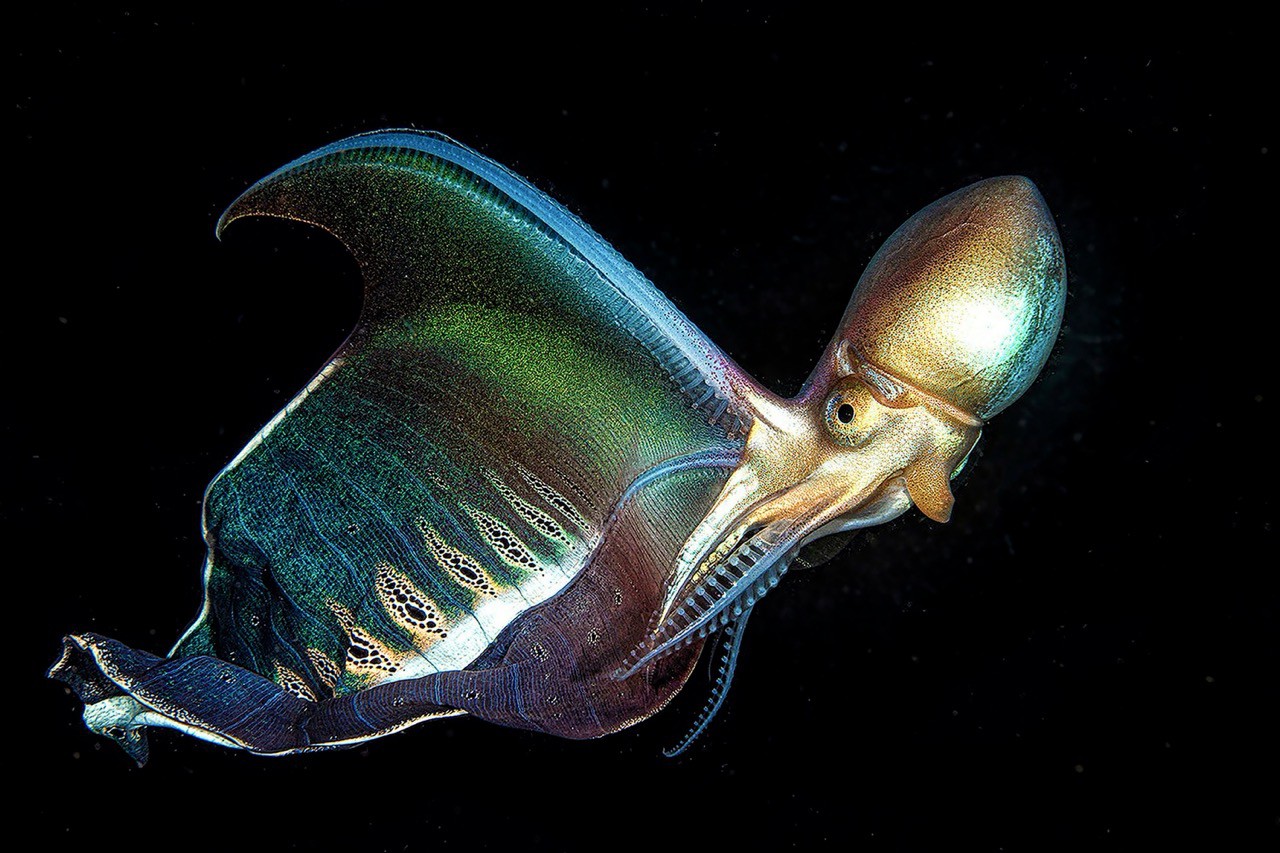
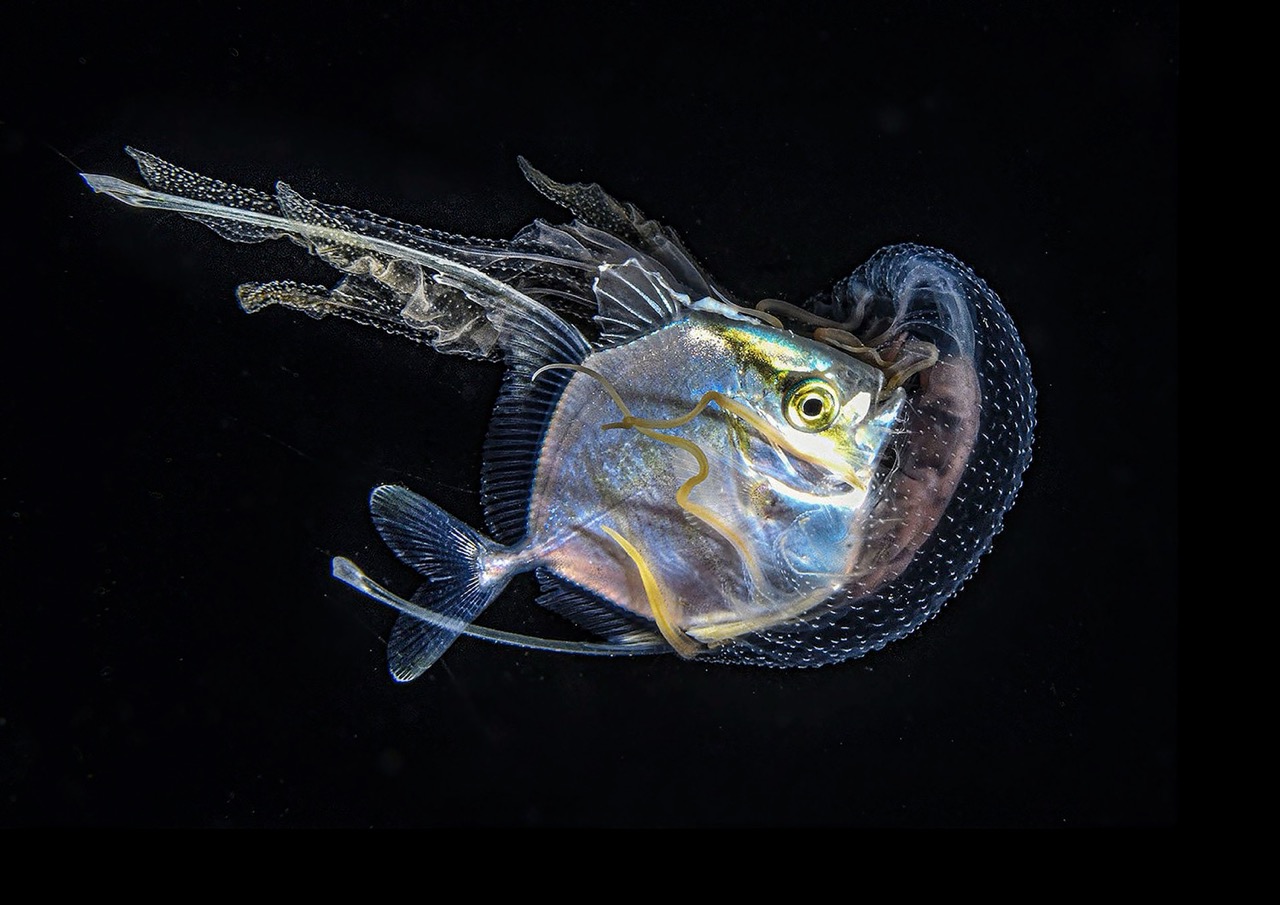
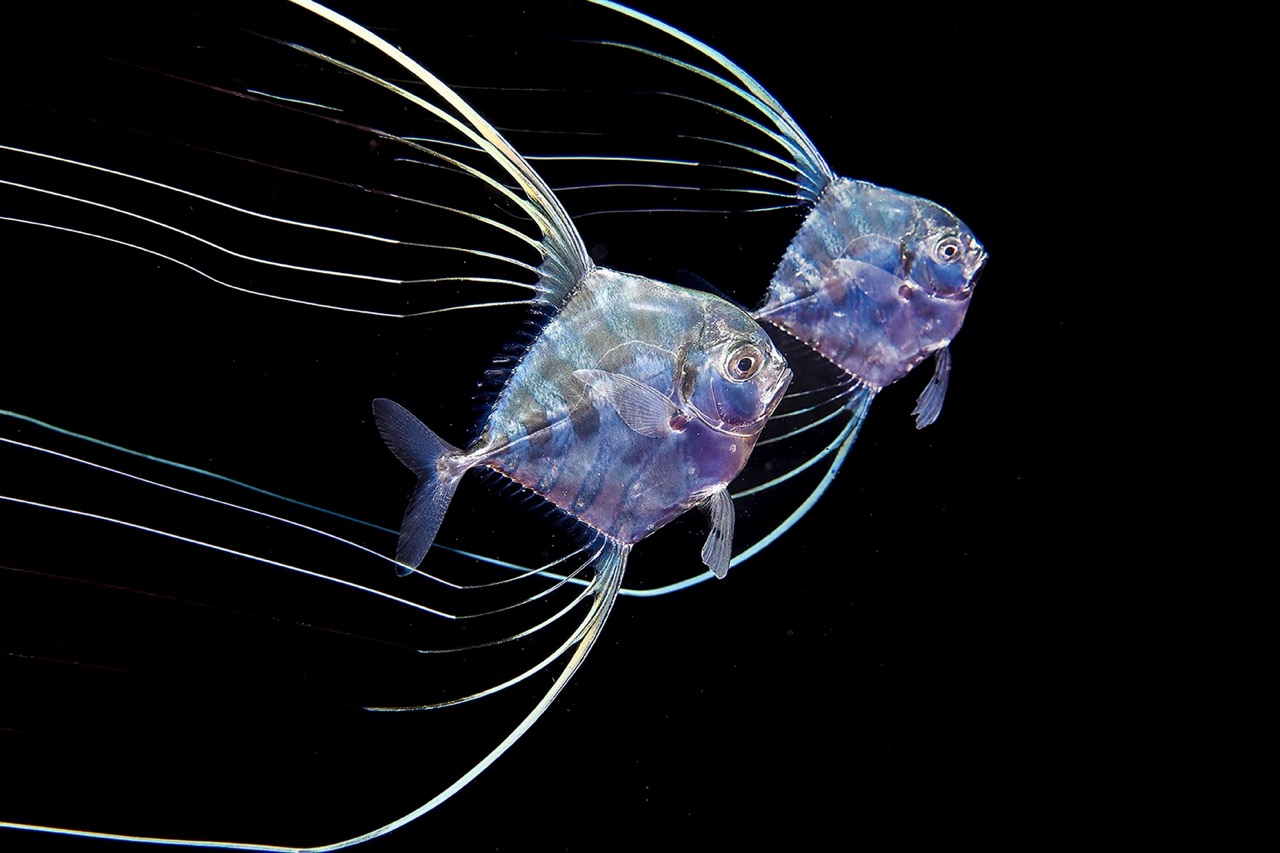
Diving at night in the open ocean—without a seabed or any points of reference—is a unique experience. At first, it feels as though you are suspended in a void; then, your lights reveal an incredible variety of organisms: fish larvae, small cephalopods, crustaceans, and jellyfish with astonishing forms. What strikes me most is the biodiversity hidden within a space that appears empty. Every dive is different, and every encounter can lead to a new discovery. It is like entering a parallel universe that remains, for the most part, unknown.
From the Series: The Invisible
Q:
Many of the organisms in your photographs are incredibly small, transparent, and constantly moving. What are the greatest challenges involved in finding and photographing these subjects?
A:
The difficulty begins with simply locating the subjects, which are often nearly invisible and perfectly transparent. You have to get close, maintain a stable position, and achieve precise focus on animals that may measure only a few millimeters. Lighting also requires special attention: the flashes must highlight structures, colors, and details without compromising the delicacy and transparency of the organisms. It calls for underwater experience, patience, and quick reflexes, as some encounters last only a few seconds.
Q:
Your subjects appear almost illuminated against complete darkness, giving the photographs a striking, almost otherworldly quality. Was this visual approach something you deliberately set out to achieve, or did it develop naturally through the shooting conditions?
A:
Initially, it is a natural characteristic of "blackwater" diving, where there is no seabed—only the ocean's darkness surrounding the subject. Over time, I have turned this condition into a conscious expressive choice. I like to completely isolate the organisms, emphasizing their shapes, colors, and anatomical details. I want them to appear as if they are suspended in space, almost as if they belong to an extraterrestrial universe. My goal is to convey to the viewer the same sense of wonder that I experience during these dives.
I believe that one cannot truly protect what one does not know.
Q:
Is there a particular photograph or encounter from The Invisible that stands out to you, and what makes it especially memorable?
A:
What I remember most are the unexpected encounters with organisms of incredible forms—often so delicate that they seem unreal. In blackwater diving, every encounter is unpredictable and can be very brief. You cannot always manage to photograph what you see, and often, there is no second chance. It is precisely this element of surprise and uniqueness that makes every dive special. For me, the best photograph is one that manages to capture the thrill of discovery and convey it to the viewer.


From the Series: The Invisible
Q:
How did you decide which photographs belonged in the final series? Were you looking for a particular visual relationship or narrative between the images?
A:
I sought to showcase the extraordinary variety of shapes, colors, and organisms that inhabit the world of blackwater. I didn’t want a simple collection of photographs, but rather a visual journey into an unknown universe.
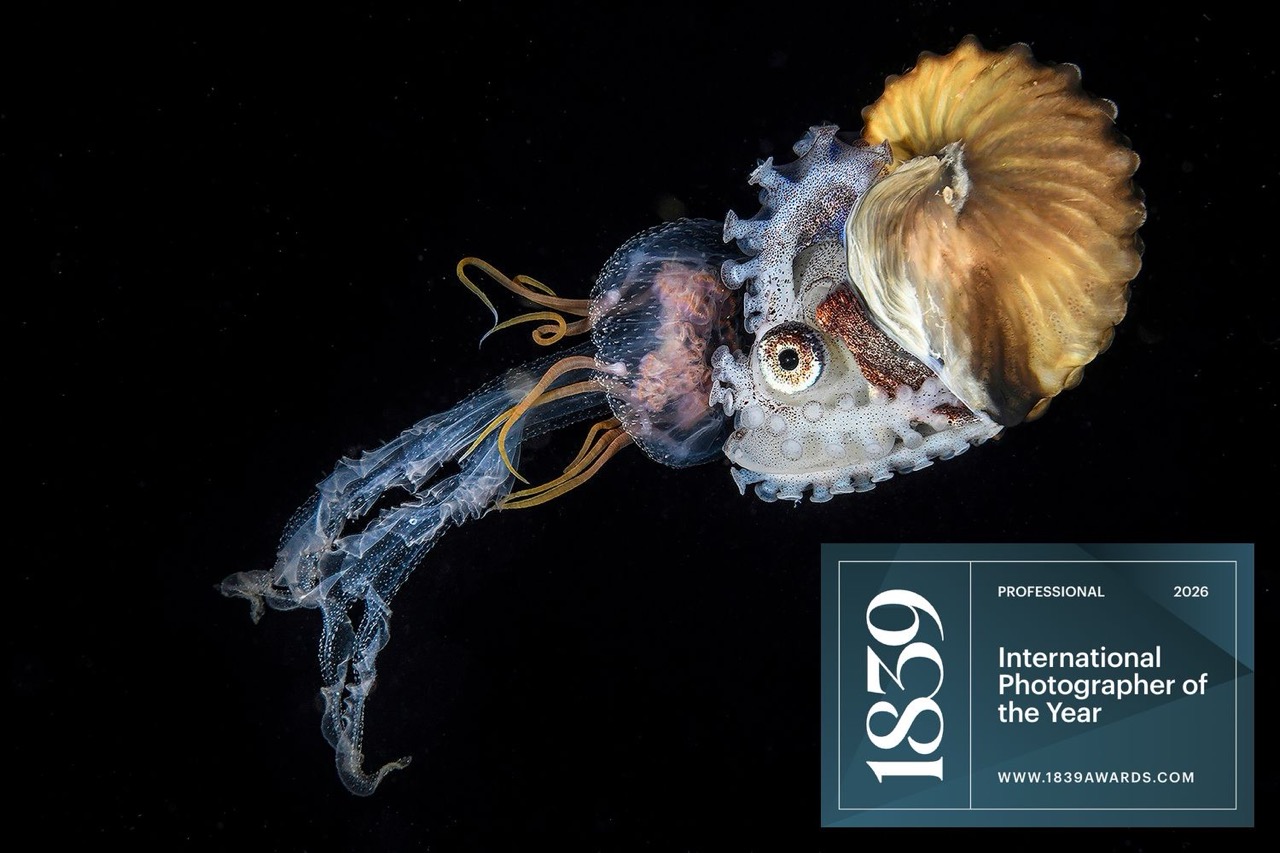
The signature image from The Invisible—the one that won an award—depicts a paper nautilus alongside a jellyfish. Ever since I was a child, I dreamed of encountering a nautilus, partly due to the fascination I felt for Captain Nemo’s submarine in Jules Verne’s novel. That dream finally came true in the waters off Batangas, in the Philippines. Photographing it was far more than just a photo opportunity; it was the fulfillment of a lifelong desire.
Q:
Your portfolio ranges from vast schools of fish and whale sharks to tiny, nearly transparent marine organisms. How does photographing life at such different scales influence what you look for in an image?
A:
The size of the subject changes the way I photograph, but not my fundamental approach: I am always looking for an image that can surprise the viewer and tell a story. With a large animal, I try to convey its presence, its movement, and its relationship with its environment. With a tiny organism, I aim to reveal details that are normally invisible. In both cases, what matters to me is finding a composition and a quality of light that can evoke emotion.
I want to convey just how extraordinarily rich ocean life is, even beyond the environments we are most familiar with. We tend to think primarily of large animals or coral reefs, yet there exists an immense universe of tiny organisms that play a fundamental role in maintaining marine balance.
Q:
On your website, you describe photography as an expression of the photographer rather than the camera. Where do you feel your own artistic perspective is most evident in The Invisible?
A:
Technology is important—especially in underwater photography—but it is not enough to create a meaningful image. The difference lies in the photographer’s ability to observe, interpret, and choose what story to tell. In The Invisible, this philosophy manifests in the pursuit of a personal visual language: isolating subjects within the darkness, focusing on intricate details, and carefully crafting compositions. A camera merely records what is placed before it; it is the photographer who decides what narrative to convey.
Q:
The organisms featured in The Invisible are rarely seen by most people, yet your photographs reveal their extraordinary detail and beauty. What do you hope viewers come to understand or appreciate about this hidden world?
A:
I want to convey just how extraordinarily rich ocean life is, even beyond the environments we are most familiar with. We tend to think primarily of large animals or coral reefs, yet there exists an immense universe of tiny organisms that play a fundamental role in maintaining marine balance. Through my photographs, I hope to spark curiosity and wonder, while also fostering greater awareness. I believe that one cannot truly protect what one does not know.
Q:
After decades of exploring and photographing the underwater world, what continues to surprise you, and are there subjects or environments you still dream of photographing?
A:
After more than thirty years of diving, what continues to surprise me is the sea’s capacity to always reveal something new. Blackwater photography has brought back the thrill I felt during my very first dives—every session is a discovery, with no way of knowing what might appear before the lens. I want to continue exploring this universe, encountering organisms and documenting behaviors that remain little understood. Ultimately, my dream is to keep searching—not necessarily for the most spectacular image, but for one capable of revealing something we do not yet know. For me, underwater photography is never about reaching a finish line, but rather about continuing to follow my curiosity.
ARTIST

