


January 14 : 2026
Luke Gram
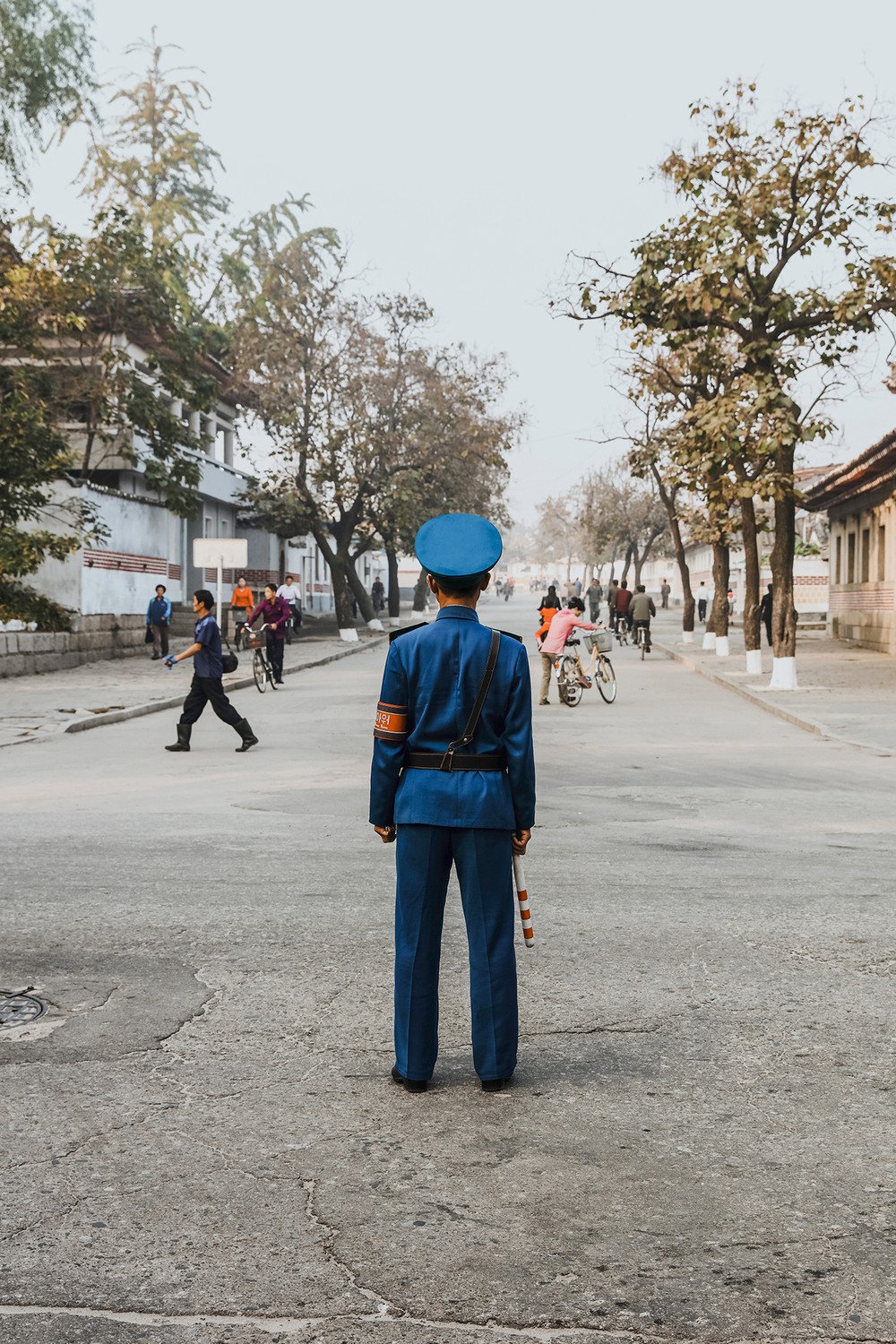
Luke’s series evokes the spirit of a place shaped by pervasive government surveillance, expressed through stark, restrained yet beautiful compositions. Look closer, however, and subtle expressions of humanity emerge, reminding us that what connects us runs deeper than the borders that divide us.
by Lily Fierman


Series: Humanity Within the Architecture of Control
Q:
Can you please tell us more about creating your winning image, “Humanity Within the Architecture of Control”?
A:
The series looks at brief moments when individual expression surfaces inside a place
defined almost entirely by restriction and control. I have always been drawn to the
presence people carry within their environments, and in North Korea that tension
becomes especially direct. To document this tension, I relied on observing, waiting, and
allowing the environment to dictate when the photograph could happen. Patience was
the only real method available.
These restrictions extended to us visitors as well. Government minders were embedded
within our group, closely monitoring both what we photographed and what we discussed.
We were given explicit instructions on what could not be photographed. Soldiers,
infrastructure, signs of poverty, or improperly framed political imagery, and much more.
This set clear boundaries around the narrative we were allowed to produce.
At the end of my visit to the DPRK, as the train approached the Chinese border, guards
boarded to review the images on our cameras. I had separated my photographs across
two SD cards, keeping non-approved images hidden on my person. This final inspection
was a stark reminder of the constant surveillance the state exerts.


Q:
What drew you to focus on quiet, everyday moments in a place so often defined by authority and structure?
A:
Authority and structure are the most visible aspects of North Korea, and they are often
what images emphasize. What interested me more was how ordinary life continues
within that framework. I wanted to observe how people move through their days and to
look for small, familiar signals of human experience that persist even in an extreme
Environment.
Quiet moments such as pauses to read, brief curiosity, boredom, or distraction felt more
revealing than overt symbols of control. These moments are not dramatic, but they are
shared across cultures, and they offered a way to understand the place through
continuity rather than spectacle.
Series: Humanity Within the Architecture of Control
Once the state recedes from the frame, what remains is a collection of people responding to their environment in ways that feel widely recognizable.
Q:
Your work highlights individual presence within a rigid system- what signs of personal expression stood out to you most?
A:
What stood out most were ordinary, unremarkable expressions. Bored workers, tired
commuters, friends sharing cigarettes, people joking quietly, moments of fatigue or
distraction. These weren’t acts of resistance or individuality, but familiar responses to
daily routines that we all do.
Once the state recedes from the frame, what remains is a collection of people
responding to their environment in ways that feel widely recognizable. They are simply
human, and it was that normalcy, rather than any dramatic gesture, that stayed with me.
Q:
How do small gestures, routines, or pauses reveal humanity in a place shaped by firm expectations?
A:
They remind us that the people within the frame are not representatives of a state or
ideology, but individuals responding to their environment in ways we do ourselves. In
that sense, it humanizes subjects not by capturing exceptional moments, but by
revealing how ordinary expressions remain visible across vastly different social, political,
and environmental conditions.



Q:
Were there moments that challenged your assumptions about life within this structured context?
A:
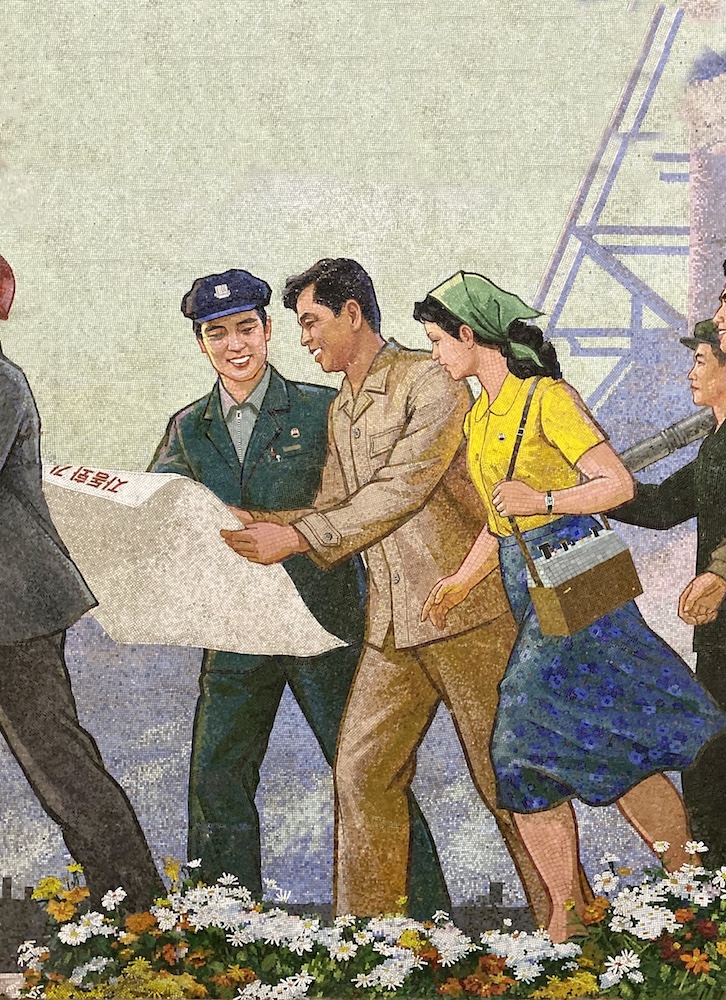
Yes. Before visiting the DPRK, much of what I knew came from extremes, either
accounts of severe repression from defectors or the highly controlled narratives
presented by the state. I arrived with uncertainty about how much of ordinary life would
be visible at all.
What challenged those assumptions was how consistently familiar human behaviours
surfaced. I shared cigarettes and food, laughed with strangers, and attempted simple
conversations across limited language. We played arcade games, and showed each
other photos of our families. These interactions were brief and constrained, but they
reflected the same deep desire for connection and shared experience I’ve found
everywhere else on my travels. My assumption was this search for connection was
incompatible in places such as this.
Q:
How did limitation- whether physical, social, or political- shape the way you observed and photographed?
A:
Limitation greatly shaped both what could be photographed and how observation had to
happen. Physical movement was controlled, social interaction was monitored, and
political boundaries defined what was considered acceptable imagery. As a result,
photography became less about searching for subjects and more about responding to
what briefly revealed itself.
Q:
What ethical considerations guided your decisions when photographing people in this environment?
A:
Ethical considerations were central to how I approached the work. I chose to travel with
an operator who has experienced in navigating the cultural and political realities of the
country, and I followed guidance intended to avoid placing people at risk. I was
conscious that images can carry consequences beyond the moment they are made. The
work focuses on moments that could exist without harm to the people within the frame,
while still acknowledging the conditions that shape them.
Q:
How did you ensure dignity and respect for your subjects while sharing their presence with an outside audience?
A:
I avoided images that reduced people to symbols of hardship or spectacle, and focused
instead on moments that reflected ordinary presence. The goal was not to define
individuals by their circumstances, but to photograph them as they appeared within their
daily environments. The intention was to present familiarity, rather than judgment and
shock, to guide the viewer’s understanding.
Q:
What do you hope viewers take away from seeing these moments of human rhythm and individuality?
A:
I hope viewers come away with a more nuanced understanding of the place and the
people within it. Rather than seeing individuals as extensions of a political system, I want
the work to create moments that bridge the extreme distance of the DPRK’s reality
through familiarity. These photographs are not meant to explain North Korea, but to
complicate the way it is often viewed and imagined.
If the work succeeds, it’ll shift attention away from spectacle and toward understanding.
The takeaway is not a conclusion about the state, but an awareness of how ordinary
human rhythm persists even in environments defined by constraint.

Q:
How do you hope this work contributes to a more nuanced understanding of daily life within authoritative systems?
A:
I hope the work adds complexity to how daily life within authoritative systems is visually
represented. These environments are often photographed through symbols of power or
extremes of suffering, which can flatten the experience of the people living within them.
By focusing on small moments of ordinary presence, the work offers a quieter insight.
ARTIST

